How Thai Amulets Are Made: Sacred Materials and Rituals
A detailed look at the traditional craftsmanship and ceremonial processes behind authentic Thai amulet creation.

The Art of Sacred Creation
Creating a Thai amulet is not manufacturing — it is a sacred ritual process in which material and spiritual dimensions are inseparable. Understanding how amulets are made deepens appreciation for why they are treated with such reverence.
Categories of Amulet Materials
Thai amulets are made from a wide range of materials, each with specific spiritual properties:
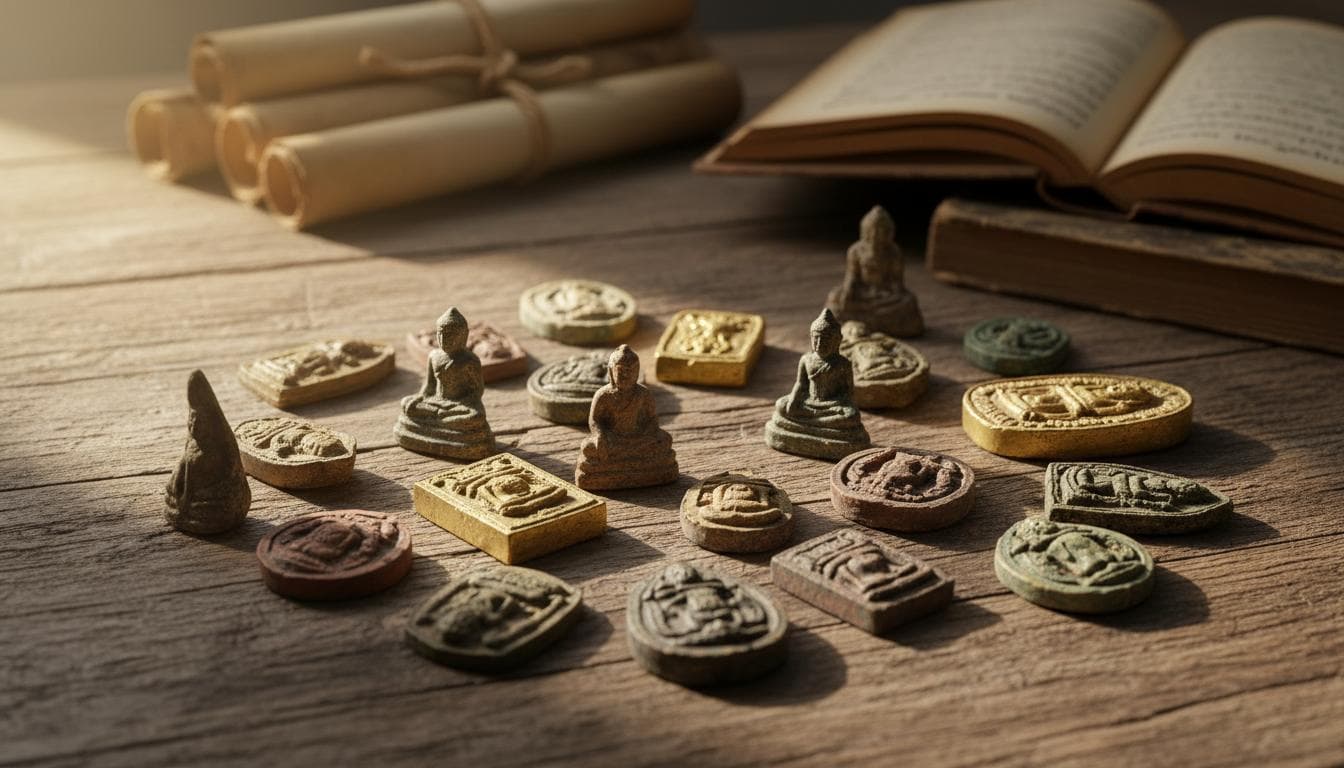
Powder Amulets (Phra Phong)
The most traditional form, powder amulets are pressed from a sacred paste that may include:
- Wan herbs — dried medicinal and magical plants
- Pollen from altar flowers — gathered from offerings made over years
- Sacred ash — from incense burned in temple rituals
- Earth from powerful locations — temple grounds, crossroads, cemeteries
- Powdered bone relics — from revered monks or saints
- Binding agents — banana paste, honey, or lacquer
The paste is pressed into molds carved from wood, stone, or bronze and allowed to cure.
Metal Amulets
Cast or stamped from metal alloys called "chanuan," these amulets often incorporate:
- Old ceremonial objects melted down — temple bells, candle holders, monk bowls
- Bronze, copper, tin, lead, and iron in prescribed ratios
- Sacred metals from lightning-struck trees (called "mai fah fa")
- Gold or silver inlay for highly valued pieces
Organic Amulets
Some amulets use naturally occurring materials:
- Tiger teeth, boar tusks, and animal bones from naturally deceased animals
- Specific woods — particularly from trees with known magical properties
- Seeds and roots from rare sacred plants
The Blessing Ceremony (Phutthaphisek)
The physical creation of an amulet is only half the process. What transforms a pressed tablet or cast pendant into a sacred object is the Phutthaphisek — the consecration ceremony.
This ceremony typically involves:
- Assembly of senior monks — often nine, twenty-seven, or one hundred eight monks for major batches
- Continuous chanting — monks recite Pali suttas around the clock for three to seven days
- Meditation transmission — masters focus their accumulated spiritual power into the amulets
- Lustral water — holy water is sprinkled over the amulets during specific ritual phases
- Final sealing — the chief presiding monk closes the ceremony with a formal blessing
The number of monks, duration of chanting, and spiritual attainment of the presiding master all affect the perceived power of the resulting batch.
The Role of the Master Monk
In Thai Buddhist belief, a monk's accumulated merit (bun barami) is the active ingredient that makes amulets powerful. Decades of strict precept observance, meditation practice, and virtuous living build up spiritual capital that can be transferred to blessed objects.
This is why amulets from universally revered monks — those who lived exemplary, austere, selfless lives — command such extraordinary respect and value. The amulet is not just a material object; it is a vessel of transmitted merit.
Modern Production vs. Traditional Methods
Large temple ceremonies today may bless hundreds of thousands of amulets at once. Critics argue that mass production dilutes power; traditionalists counter that the master's blessing extends equally to all pieces in the ceremony.
At the highest level, individually hand-crafted amulets — made by a master from start to finish — remain in a category of their own. These are vanishingly rare and never available commercially; they are given directly by the master to those he chooses. When you acquire a piece with known material origins, documenting the full composition on Panya preserves that knowledge for future generations of collectors.