The Five Sacred Amulets of Thailand: Benjaphakhi
An in-depth look at Thailand's legendary Benjaphakhi — the five holiest amulets recognized by collectors and devotees alike.

The Five Supreme Amulets
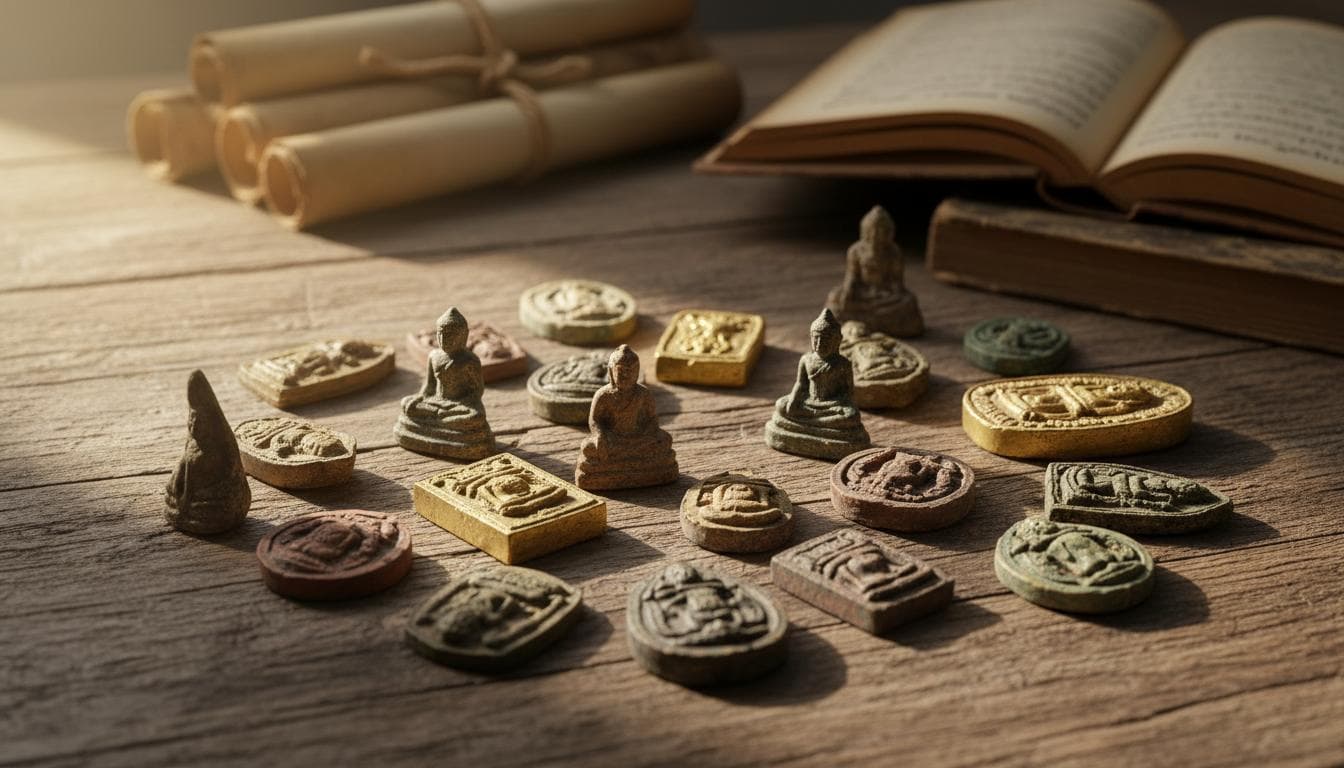
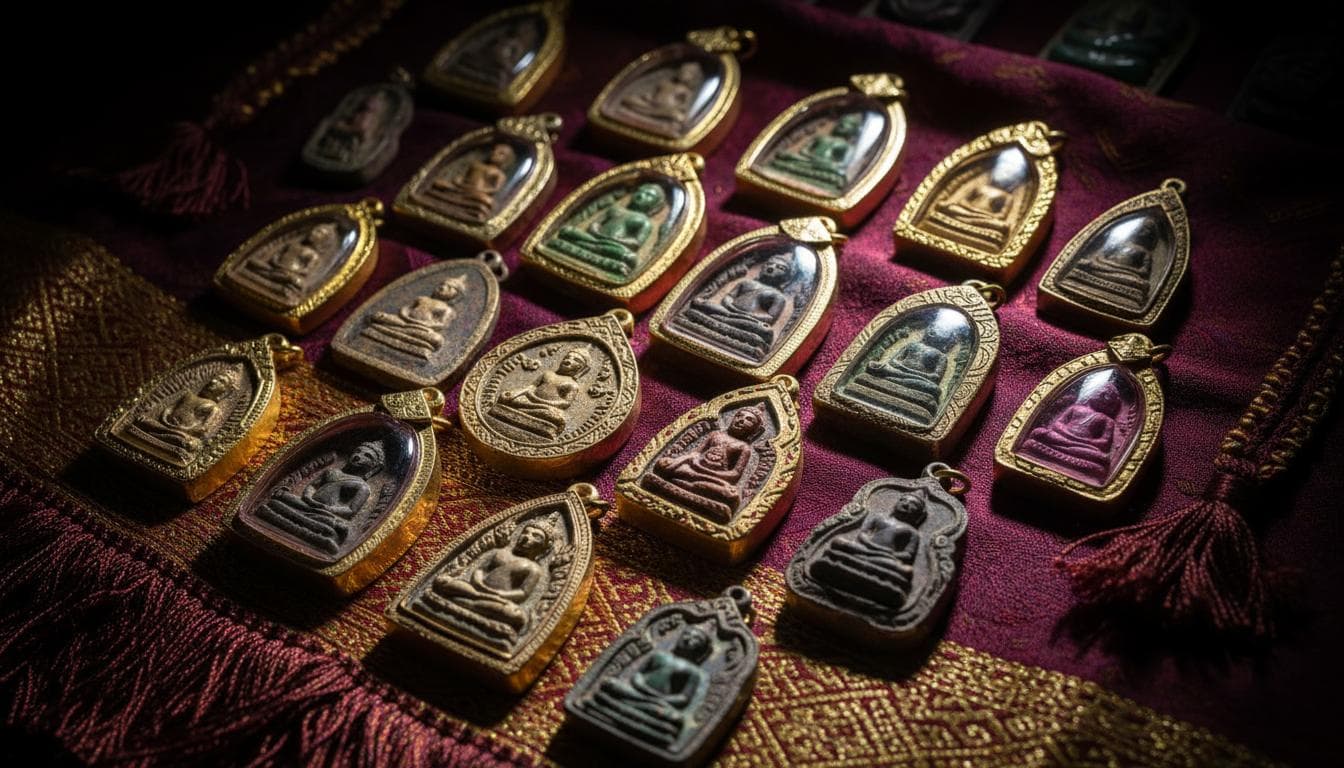
In Thai amulet culture, certain pieces transcend ordinary collecting to become national treasures. The "Benjaphakhi" — meaning "five sacred groups" — identifies the five categories of amulets considered the most holy, powerful, and historically significant in all of Thailand.
1. Phra Somdej (Wat Rakhang, Wat Bang Khun Phrom, Wat Kalayanamit)
The crown jewel of Thai amulet culture. Created by Somdej Toh in the mid-19th century, Phra Somdej amulets are pressed from sacred white paste and depict the Buddha in the Maravijaya posture. Authenticated antique pieces are among the most expensive objects in the Thai collectible market.
2. Phra Nang Phaya (Phitsanulok)
Dating to the late Ayutthaya or early Sukhothai period (approximately the 15th century), Phra Nang Phaya amulets were discovered at Wat Nang Phaya in Phitsanulok. The name means "Queen" — legend associates them with a royal consort who donated her jewelry to be melted into the amulet paste. They are known for bringing good fortune and are traditionally associated with women's power and grace.
3. Phra Phong Suphan (Suphanburi)
From the ancient city of Suphanburi, these amulets were discovered in the ruins of Wat Phra Sri Rattana Mahathat and are believed to date from the 14th or 15th century. Their brownish clay surface and subtle Buddha image make them immediately recognizable to experienced collectors.
4. Phra Rod (Lampun)
Among the oldest recognized amulets in Thailand, Phra Rod amulets come from Wat Mahawan in Lampun and are associated with the Mon-period queen Chamthewi who is said to have commissioned them around the 7th century CE. They are remarkable for their antiquity and the historical depth they represent.
5. Phra Phong Phisanulok (Phitsanulok)
Closely related to Phra Nang Phaya in origin, these earthen powder amulets from Phitsanulok are distinguished by their particular clay composition and Buddha posture. Collectors prize them for the delicate detailing preserved despite centuries of age.
What Makes an Amulet "Benjaphakhi"?
The designation emerged from collector consensus rather than religious decree. The five categories share several qualities:
- Age: — All are antiques, many centuries old
- Provenance: — Tied to historically documented temple sites
- Spiritual potency: — Backed by generations of devotee testimony
- Material rarity: — Cannot be reproduced — finite supplies only
Owning a Benjaphakhi Piece
Authentic Benjaphakhi amulets are vanishingly rare and command extraordinary prices. For most collectors, the goal is to study and appreciate them rather than own one. However, temples near the original discovery sites often produce commemorative batches using similar materials and traditional methods — legitimate pieces that carry their own spiritual merit.
If you ever encounter a Benjaphakhi piece offered at an accessible price, treat it with extreme skepticism. Authentic examples pass through specialist auction houses or are held by established collectors with detailed provenance records. Panya's cataloging features are particularly useful for documenting the reference materials and committee certificates that Benjaphakhi research demands.