The Ayutthaya Kingdom and Its Sacred Amulet Heritage
How the ancient capital of Ayutthaya shaped Thai Buddhist art and produced some of the most historically important amulets ever found.

The Kingdom at the Center of the World
The Ayutthaya Kingdom (1351–1767 CE) was for four centuries one of Asia's most powerful states — a cosmopolitan trading empire at the confluence of the Chao Phraya, Lopburi, and Pasak rivers, north of modern Bangkok. At its height, Ayutthaya was among the largest cities in the world, with a population exceeding one million.
Its fall — sacked and burned by Burmese armies in 1767 — was a catastrophic cultural disruption. But the destruction also preserved: buried in the rubble of temples, hidden in reliquaries, sealed in chedi cavities, were thousands of sacred objects that archaeologists and treasure hunters have been recovering ever since.
Ayutthaya as a Sacred Arts Center
The Ayutthaya period synthesized multiple artistic and spiritual traditions:
- Khmer influences — from the earlier Angkor-period dominance of the region
- Sukhothai aesthetics — absorbed as Ayutthaya expanded northward
- Sri Lankan Theravada — influences channeled through direct religious exchange
- Chinese artistic elements — from the substantial Chinese merchant community
- Later Indian Muslim influences — from expanding trade networks
The result was a distinctive Ayutthaya Buddhist art style — elongated Buddha figures with distinctive crowned heads, flame-shaped ushnisha (cranial protuberances), and highly refined gold and lacquerwork.
Amulets from the Ayutthaya Period
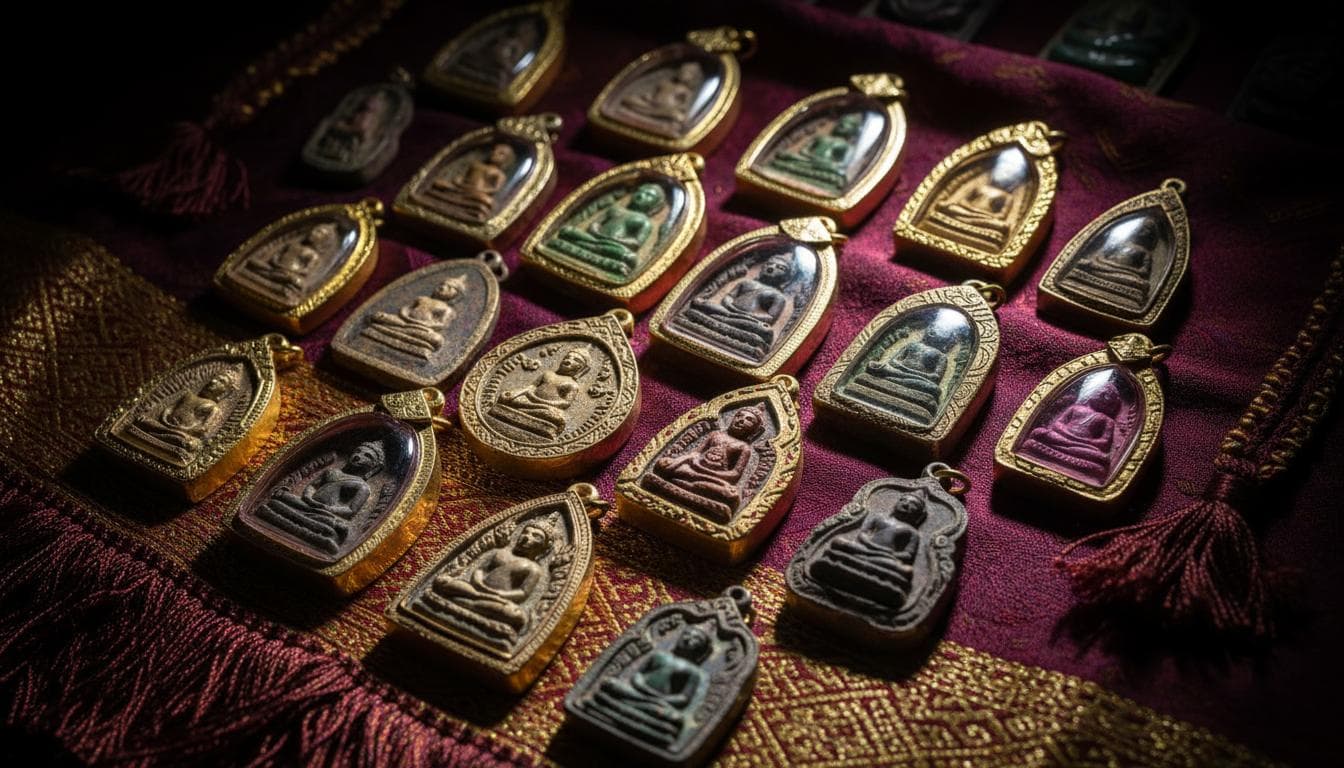
Ayutthayan amulets are among the most historically significant objects in Thai collecting:
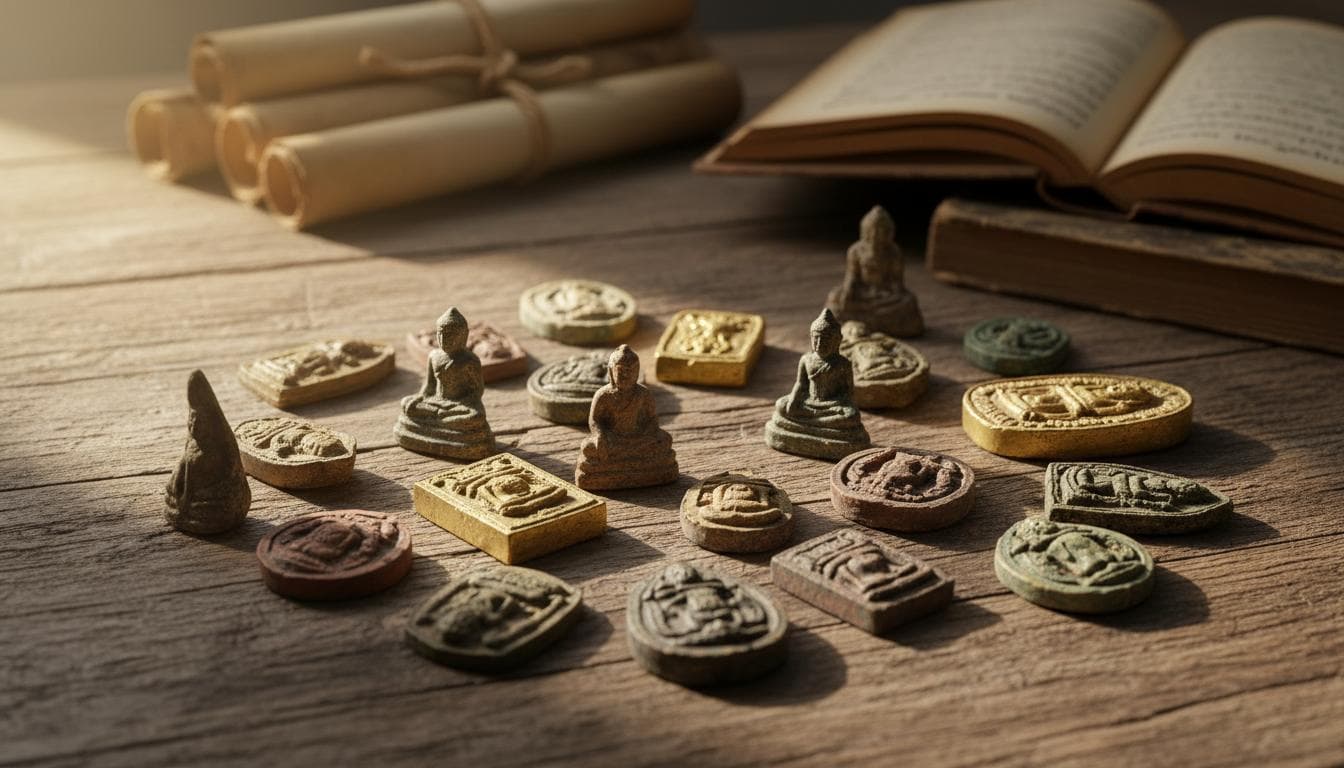
**Phra Phong Suphan** — associated with the Suphanburi region that was closely tied to Ayutthaya's founding dynasty. These powder amulets are included in the Benjaphakhi (Five Sacred Amulets) and represent the period's characteristic terracotta amulet production.
**Phra Nang Phaya (Phitsanulok)** — while associated with Phitsanulok rather than Ayutthaya city itself, these amulets date from the Ayutthaya period and reflect its artistic conventions.
**Archaeological pieces from Ayutthaya ruins** — excavations in and around the UNESCO World Heritage Site of Ayutthaya have yielded amulets from across the kingdom's history. These are museum pieces; export is restricted.
The Destruction and What Was Saved
When Burmese forces sacked Ayutthaya in 1767, they systematically looted the temples and melted down gold Buddha images. However, items sealed within walls, buried beneath floors, and hidden in structural cavities of collapsed temples survived.
Over subsequent centuries, renovation work and deliberate excavation at Ayutthaya temple sites has revealed thousands of amulets in remarkable condition. The Fine Arts Department of Thailand holds authority over archaeological discoveries; private ownership of verified Ayutthayan artifacts is legally complex.
Visiting Ayutthaya
The ruins of Ayutthaya are accessible by train from Bangkok (approximately 1.5 hours) or by river boat. The UNESCO heritage zone contains dozens of temple ruins, several with active restoration work.
The Ayutthaya Historical Study Centre and Chao Sam Phraya National Museum hold important collections of Ayutthayan artifacts including amulets, Buddha images, and temple ornaments. Visiting these collections provides unparalleled context for understanding what the kingdom's sacred arts tradition produced.
For Collectors
Genuine Ayutthayan-period amulets that have passed legally into the collector market are extraordinarily rare and command museum-quality prices. Study them through museum collections, academic publications, and auction catalogs. Understanding their aesthetics and material characteristics is foundational knowledge for anyone serious about the history of Thai amulets. Panya's reference library and community experts are a practical starting point for building this foundational knowledge.