Wat Phra Mahathat Woramahawihan: The Heart of Southern Thai Buddhism
A deep dive into Nakhon Si Thammarat's ancient temple — the most sacred site in southern Thailand and a major center of amulet tradition.

The Sacred South
If Wat Rakhang in Bangkok is the spiritual home of central Thai amulet tradition, then Wat Phra Mahathat Woramahawihan in Nakhon Si Thammarat holds an equivalent position for the south. The temple's history spans over a millennium, its chedi enshrines a relic of the Buddha, and its influence on southern Thai Buddhism and amulet culture is immeasurable.
Origins and History
Nakhon Si Thammarat (historically known as Ligor or Tambralinga) was an ancient trading city with connections to India, Sri Lanka, and China long before Thai kingdoms existed. The temple is traditionally dated to the 8th or 9th century CE, though its major construction phases belong to the 13th century when the city was at its height of regional power.
The temple's founding legend involves the enshrinement of sacred Buddha relics brought from Sri Lanka by mission monks in the early centuries of Theravada's spread through Southeast Asia. This Sri Lankan connection gave Wat Mahathat a direct link to the Theravada tradition at its source — a prestige that has persisted for a thousand years.
The Main Chedi
The central reliquary tower of Wat Mahathat is one of the most distinctive architectural forms in Thai religious architecture: a tall, tapering spire based on a Sri Lankan dagoba style but developed through centuries of Thai adaptation. Rising over 77 meters, it dominates the temple compound and the surrounding city.
The chedi is believed to enshrine a tooth relic of the Buddha — a claim it shares with several other Southeast Asian temples, each with its own supporting tradition. For devotees, the specific relic's authenticity matters less than the faith community that has gathered around it across the centuries.
Sacred Arts and the Museum
The temple compound includes the Wat Phra Mahathat National Museum, which holds one of the finest collections of southern Thai Buddhist art: Srivijaya-period images, early Theravada sculpture, architectural elements, and devotional objects spanning more than a millennium.
For serious amulet collectors, this collection provides essential visual education in the artistic conventions that inform southern Thai amulet production — the characteristic features of Srivijaya-period Buddha images, the distinctive southern Thai craftsmanship in gold and metal, and the sacred iconography specific to this region.
The Temple's Living Amulet Tradition
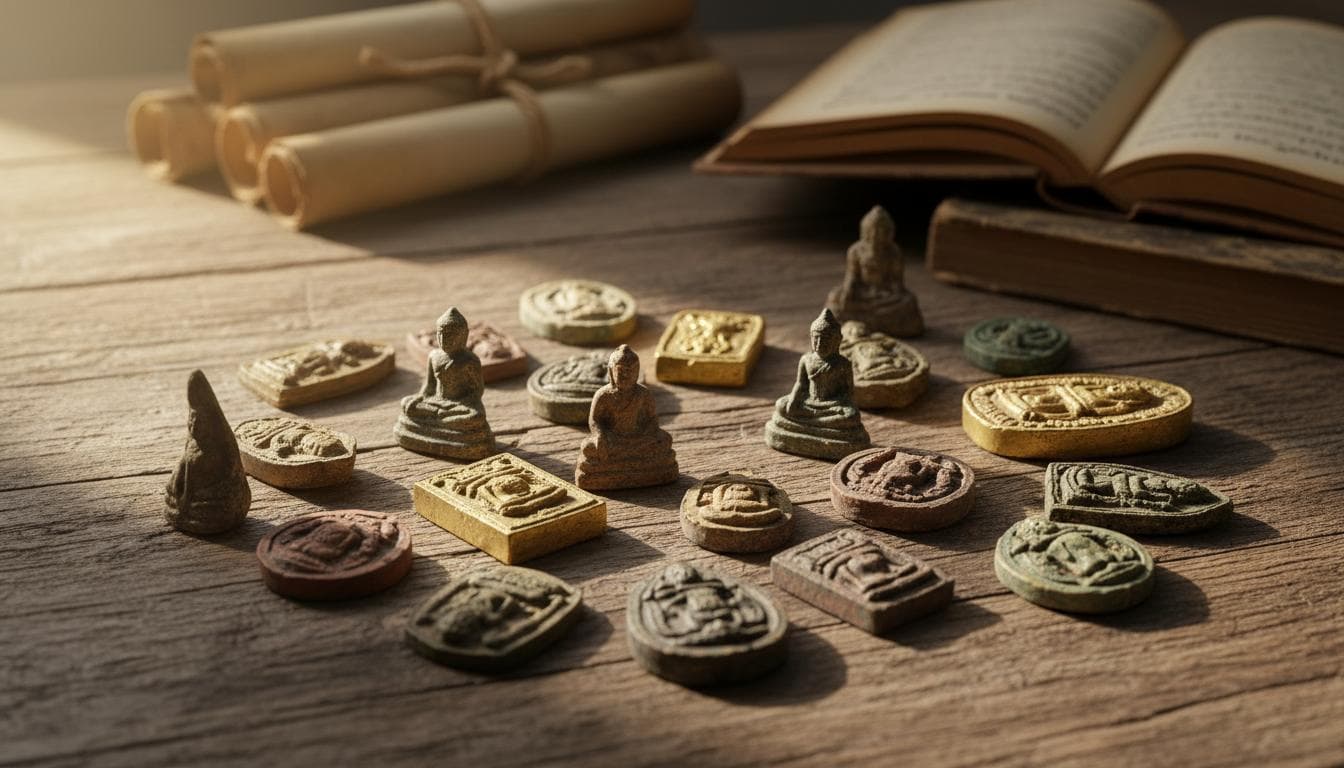
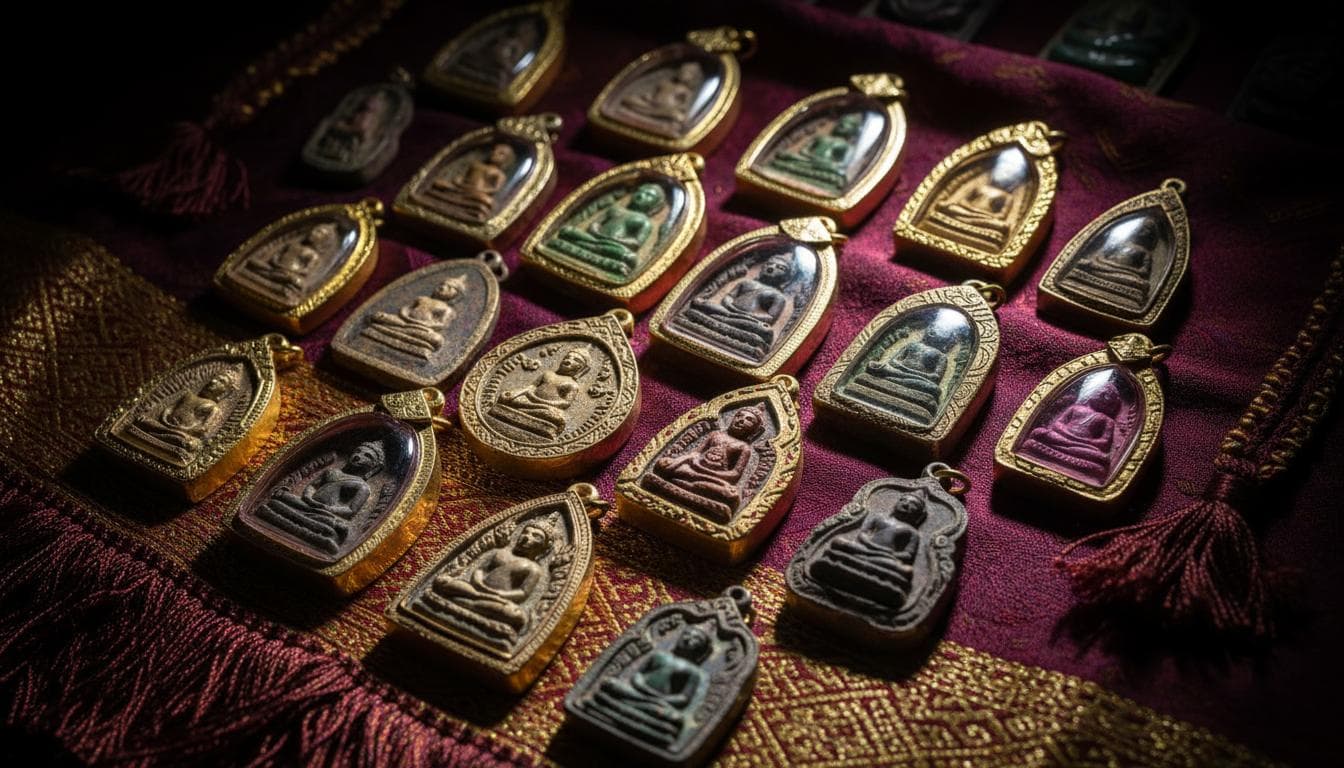
Wat Mahathat has been an active amulet-producing temple for centuries. Its most famous contemporary connection is to the Jatukam Ramathep tradition (see dedicated article), but the temple's own production includes:
- Phra Mahathat amulets — depicting the temple's distinctive reliquary tower
- Regional Buddha image amulets — in characteristic southern Thai style
- Sacred soil and sacred water — from the temple grounds, incorporated into paste amulets
- Commemorative batches — for major temple anniversaries
The blessing ceremonies at Wat Mahathat, conducted by senior monks in the presence of the sacred relics, are considered among the most potent in the south.
Visiting Nakhon Si Thammarat
The city is accessible by train (approximately 12 hours from Bangkok), bus, or domestic flight (Nakhon Si Thammarat airport has connections to Bangkok). The temple is open daily and the attached market area — one of the most vibrant amulet markets outside Bangkok — makes an excellent companion to the spiritual visit.
Significance for Southern Thai Identity
Wat Mahathat is not simply a tourist attraction or collector destination — it is the living center of southern Thai Buddhist identity. Pilgrims travel from across the region to make merit at the reliquary, and the temple's abbots and senior monks carry cultural authority that extends throughout the southern provinces.
Understanding Wat Mahathat means understanding the spiritual geography of southern Thailand and the distinct character of amulet tradition that emerges from it. Collectors building a southern Thai focus can use Panya to organize their pieces by temple origin and track the regional provenance that makes this tradition distinct.