Kruba Srivichai: The Saint of Northern Thailand
The remarkable life of the monk who built Doi Suthep's road and whose amulets remain among the north's most treasured.

The People's Saint
In northern Thailand, one monk's name is spoken with near-universal reverence across religious and generational lines: Kruba Srivichai (1878–1938). Known as the "Saint of Lanna," he devoted his life to temple restoration and community service in an era of profound social change.
Origins and Ordination
Born in Lamphun province into a farming family, Srivichai ordained as a monk at age eighteen and never looked back. He lived with extreme austerity — eating once daily, sleeping little, never handling money — and developed a reputation for supernatural abilities that drew pilgrims from across the north.
The Road to Doi Suthep
Kruba Srivichai's most celebrated achievement was organizing the construction of the road to Wat Phra That Doi Suthep, the sacred temple perched above Chiang Mai at 1,053 meters. Before this road existed, the temple was accessible only by a steep jungle footpath.
In 1934, Srivichai called upon the people of Lanna to build the road together. The response was extraordinary: tens of thousands of volunteers from villages across northern Thailand — and even from Burma, Laos, and Shan State — came to contribute labor. The 12-kilometer road was completed in just 5 months and 22 days, a feat that would normally require professional construction crews working for years.
This collective act of merit-making cemented Srivichai's status as a saint in the eyes of the northern Thai people.
His Amulets
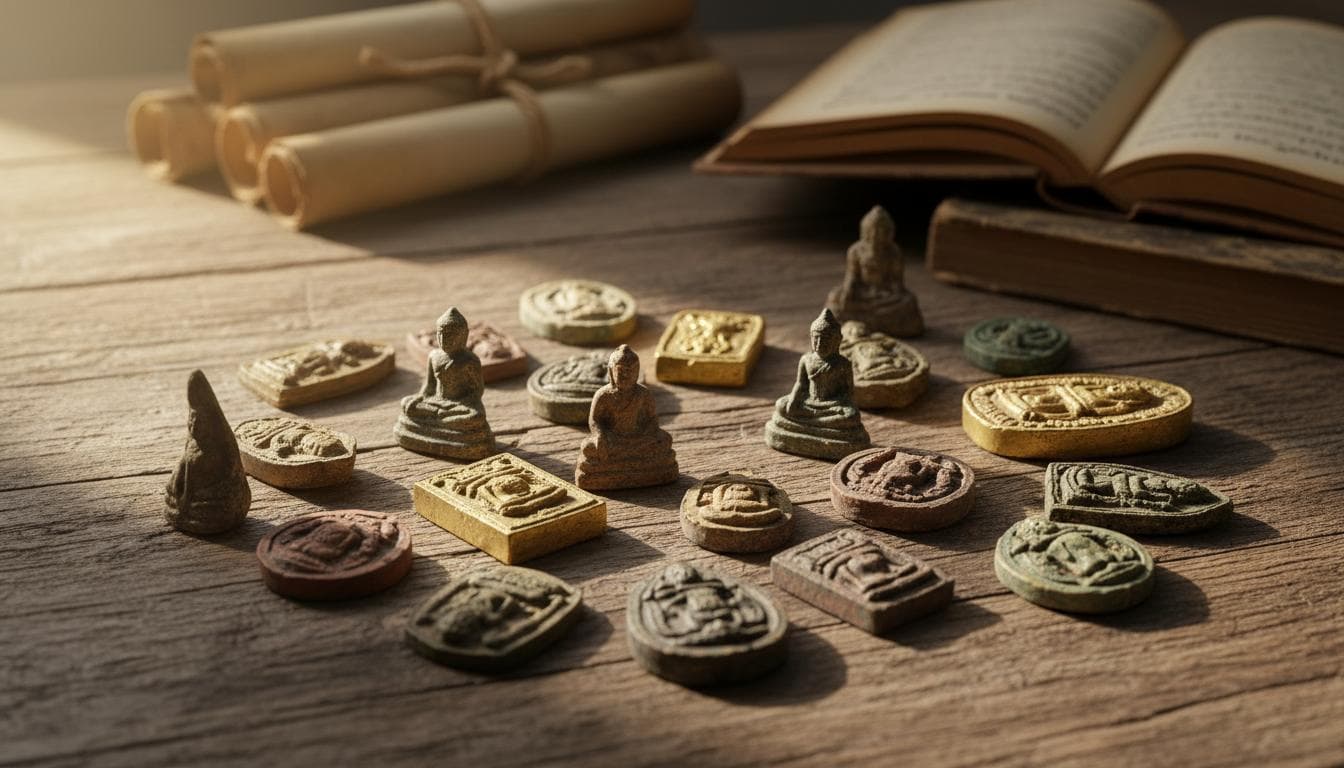
Kruba Srivichai produced relatively few amulets during his lifetime — he was never motivated by commercial considerations. The pieces he created or blessed are therefore extraordinarily rare:
- Phra Somdej-style tablets — pressed in traditional powder paste
- Takrut scrolls — inscribed with his distinctive Lanna script spells
- Monk coin medallions — bearing his image, produced for temple fundraising
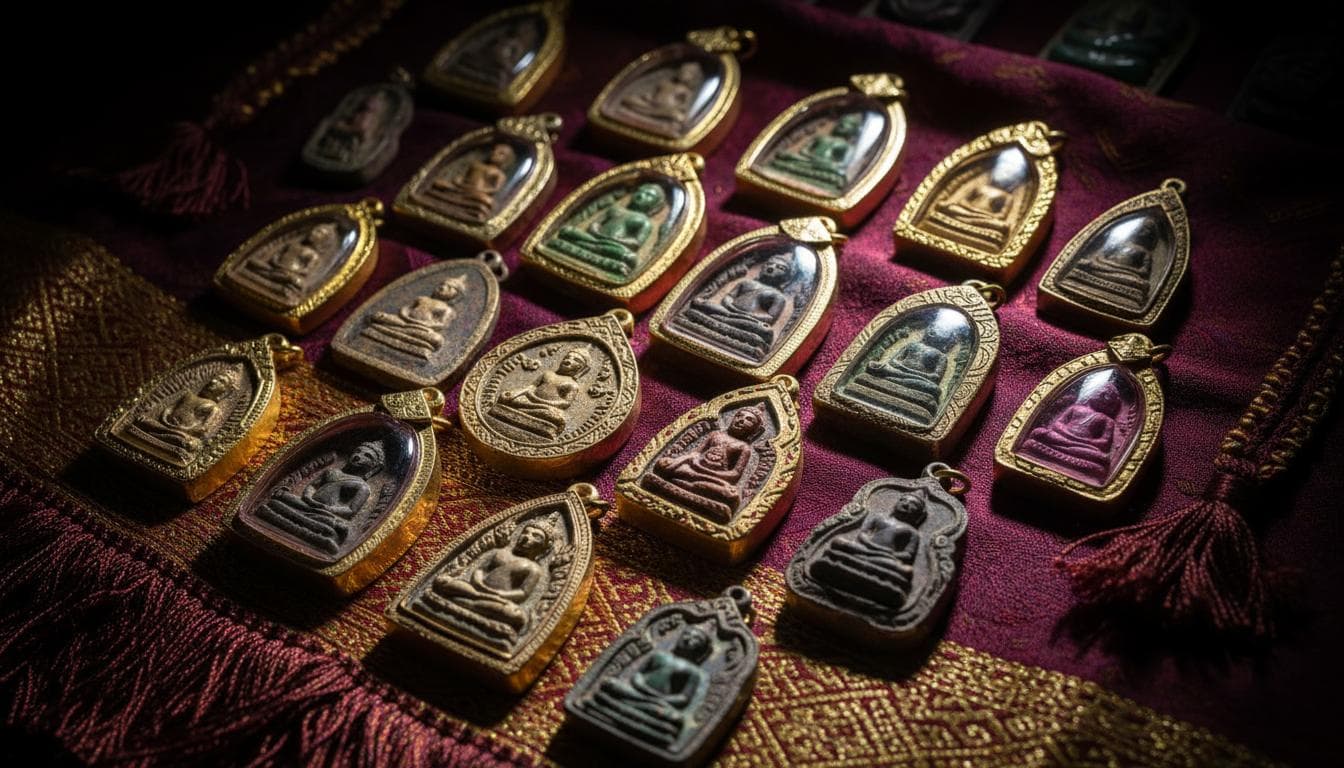
These amulets are now among the most valuable in the northern Thai collector market. The combination of his extraordinary life story, historical significance, and genuine scarcity drives prices to remarkable heights.
Veneration Today
Statues and images of Kruba Srivichai are found at virtually every Lanna-region temple. His birthday and death anniversary draw massive gatherings at Wat Ban Pang in Lamphun, his home temple.
Contemporary monks who walk in his tradition — including Kruba Bunchum, Kruba Dumrong, and others — carry significant followings of their own, and their amulets are eagerly collected by devotees who see them as heirs to Srivichai's spiritual lineage. Panya makes it easy to catalog northern Thai pieces by lineage, helping collectors distinguish Kruba Srivichai originals from the commemorative batches produced in his honor.
Why He Matters
Kruba Srivichai's legacy shows that the greatest Thai monks were not distinguished by wealth or political power, but by selfless service and the moral authority that flows from an exemplary life. His amulets are treasured precisely because they embody a life devoted entirely to others — the ultimate source of transferable merit.